Speed
RLT often reaches the root of the problem in the first session. It does not spend time circling the issue.



You have had the same conversation more times than you can count. It starts differently and ends the same way. One of you shuts down. One of you pushes harder. And somewhere underneath the argument is something neither of you knows how to say.
Relational Life Therapy (RLT) does not just help you communicate better. It goes after the patterns that keep pulling you back into the same dynamic, where they come from, and what it would take to finally change them.

We were taught to perform, to manage, to keep the peace or to win the argument. RLT, developed by Terry Real over 40 years of clinical work, starts from a different premise entirely.
That true intimacy is only possible when partners show up as equals. Not one-up, not one-down. Same as. And that to get there, both partners have to look honestly at the patterns they brought into the relationship and take real responsibility for changing them.
RLT often reaches the root of the problem in the first session. It does not spend time circling the issue.
The therapist is not neutral. RLT names what is not working, confronts harmful behaviour with compassion and takes sides when one partner is causing more harm.
Trauma work happens in the room with both partners present. When each partner sees the other’s pain and patterns, empathy deepens and real change becomes possible.
RLT teaches practical relational skills. But only after the parts that resist using them have been worked with directly.
We identify the cycle you are both stuck in. Not the surface argument but what is driving it. The roles each of you plays, how you trigger each other, and what you are both actually trying to say underneath the noise. Most couples describe this phase as the first time they have ever truly understood what is happening between them.
We go to the roots. The childhood wounds, the learned survival strategies, the ways each of you learned to protect yourselves that now damage your relationship. This is where trauma work happens, with both partners present. When each person sees the pain behind the other’s behaviour, everything shifts.
Now we build. New ways of communicating, repairing, and relating. Concrete tools from Terry Real’s framework, including the Feedback Wheel and relational mindfulness. Skills that work because the parts that used to resist them are no longer running the show.
RLT is particularly powerful for high-achieving couples who are good at solving problems everywhere except in their relationship.
RLT is the backbone of how I work with couples. It is often combined with IFS so each partner understands their own parts, and with Brainspotting when deeper trauma work is needed.
Exploration and Deepening therapy intensives
Learn moreParts work meets relational change
Learn moreRelational patterns in your own life
Learn moreImmersive couples work in Bali
Learn moreTwo books worth reading. Three podcasts worth listening to.
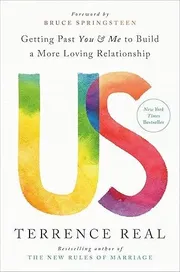
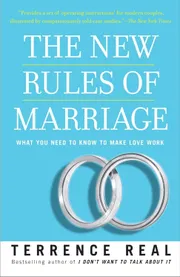
Mel Robbins with Terry Real, founder of RLT
Tim Ferriss with Terry Real, founder of RLT
Andrew Huberman with Terry Real, founder of RLT
RLT is considerably more direct than most couples therapy. The therapist is not a neutral facilitator. When a harmful pattern is present, it gets named. Terry Real developed RLT specifically for couples who are capable, high-performing, and still stuck in the same relational cycle. It moves faster than most approaches because it does not spend time circling the issue. It goes straight to the root.
Directness is not the same as harshness. RLT confronts harmful patterns with compassion. The goal is never to blame but to make visible what is keeping both of you stuck. Most couples describe the experience as the first time they have genuinely understood what is happening between them, not as an attack on either person.
The first phase is about seeing the cycle clearly: what is driving the dynamic and what each of you is actually trying to say beneath the argument. The second goes to the roots, the childhood wounds and survival strategies that show up in the relationship now. The third builds new skills and patterns that hold because the parts that used to resist them have been worked with. In an intensive format, all three phases can unfold across two concentrated days.
Yes. RLT is particularly well-suited to repair after betrayal because it works at the level of the underlying patterns that contributed to the rupture, not just the surface event. Repair is possible. Whether a couple chooses it is a different question, and one that the work helps clarify.
Yes. RLT includes concrete relational skills, including the Feedback Wheel and relational mindfulness practices. The important distinction is that in RLT, skills come after the parts that would normally resist using them have been worked with. That is what makes them stick.
Yes. RLT is relational rather than prescriptive, meaning it works with the specific dynamic between the two people in the room, regardless of gender or orientation.
A free 15-minute conversation. No commitment, no pressure. Just enough time to feel if this feels right.