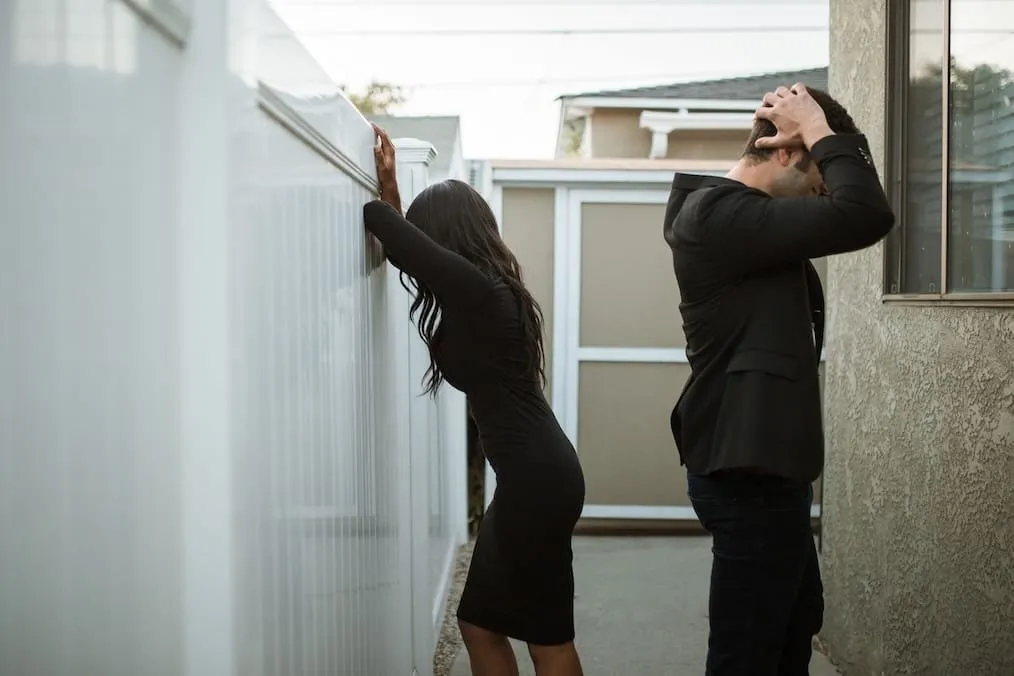
Your husband or wife has told you they want a divorce, and you are not ready. Or you are the one who wants a divorce, and your partner is pleading for another chance. Either way, one of you is leaning out, one is leaning in, and every conversation goes nowhere.
Couples therapy rests on one assumption: that both of you want the relationship to work. When one partner has already started leaving, emotionally if not yet physically, that assumption breaks in the first session. One person arrives ready to repair. The other arrives to show they tried.
Individual therapy has the opposite problem. It only ever hears one side of the marriage.
Discernment counselling was built for the gap between the two.
What is discernment counselling?
Discernment counselling is a short, structured process for couples where one partner is leaning out of the relationship and the other is leaning in. It was developed by Dr Bill Doherty at the University of Minnesota for what he calls mixed-agenda couples, who he estimates make up at least 30 percent of couples seeking help.
It is not couples therapy. It does not aim to improve communication, reduce fights or bring you closer. Those can come later, if that is the path you choose.
Not sure if you want to stay married? The goal is a decision you can trust
The goal of discernment counselling is for both of you to arrive at a decision about the future of your relationship with clarity and confidence.
Clarity means you understand what has happened to the marriage and what each of you has contributed to it. Confidence means the decision still holds when doubt returns, because you know you looked at it properly rather than deciding in a tired or angry moment.
How the sessions work
We start with a Zoom consultation to make sure discernment counselling is the right fit: that one of you is leaning out, that both of you are willing to attend, and that it is safe to do this work together. From there, you commit to one session at a time, up to a maximum of five. The first session runs about two hours. At the end of each one, you each decide separately whether to come back.
Most of the work happens in individual conversations with each partner, with short, structured moments of sharing together. That design is deliberate. The partner leaning out gets to be honest about their doubts without being argued out of them. The partner leaning in gets to stop pleading and look at their own part.
Ambivalence usually means two parts of you are telling the truth at once. One part is done. Another is not ready to let go. Discernment counselling makes room for both, instead of forcing a verdict before you understand what each one is protecting.
The three paths
Every conversation points toward one of three directions:
- Path one: keep things as they are for now.
- Path two: move towards separation or divorce.
- Path three: commit to six months of couples therapy, with divorce off the table, each of you working on your own agenda for change, then a review of where you stand.
None of these is the correct answer. A decision to separate does not have to be mutual. When it comes after this work, the landing is usually softer, because you both understand what happened. That is a better outcome than a half-hearted attempt at therapy that drags on for a year.
Why the focus is on you, not your partner
The hardest part of discernment counselling is that it asks each of you the same question: what have I contributed to where we are now? That is not about blame, and it does not assume the contributions are equal.
It matters because a decision made without that understanding tends to follow you. Leave without seeing your own pattern, and it often shows up again in the next relationship. Stay without seeing it, and you are likely to end up back in the same argument.
Why a short process works better than waiting
Ambivalence is exhausting. Months of “let’s see” wear down trust, unsettle children and keep both of you in limbo. A process with a clear end point gives one question a few focused conversations with someone who is not on either side.
When discernment counselling is not the right fit
It is not suitable where there is violence or fear in the relationship, or where one partner has already made a final decision to leave. In those situations a different kind of support is needed, and I can talk you through what that looks like. Checking this is part of what the Zoom consultation is for.
Discernment counselling in Jakarta and online
I offer a discernment process informed by Bill Doherty’s model, in person in Jakarta and online.
The goal was never to save the marriage or to end it. It is to reach a decision with clarity and confidence, so that a few months from now, whichever way you went, neither of you is still wondering.
If one of you is halfway out the door, book a Zoom consultation. We will talk through whether discernment counselling fits where you both are right now.